

 27 June, 2026
1. INTRODUCTION
Did you know that molars not only help us chew food but also play an important role in maintaining occlusal balance, protecting the temporomandibular joint (TMJ), and contributing to facial shape? When a molar is damaged—due to tooth wear, dental caries, or cracks and fractures—many people immediately think of a dental crown, which involves reducing the entire tooth so that a crown can be placed over it. However, this procedure may sometimes result in the unnecessary removal of a large amount of healthy tooth structure.
Today, with the modern dental philosophy of “maximum preservation of tooth structure,” an advanced treatment option has been introduced—table top restoration. This is a minimally invasive restorative technique that preserves the natural tooth structure while providing outstanding chewing function and esthetic results.
2. WHAT IS A TABLE TOP RESTORATION?
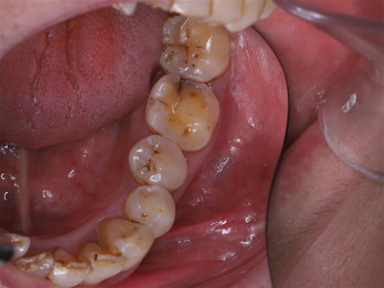
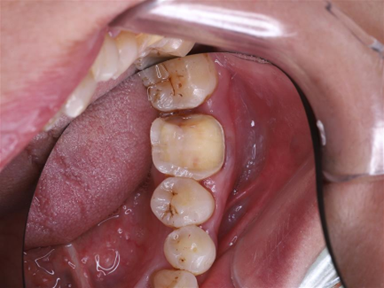
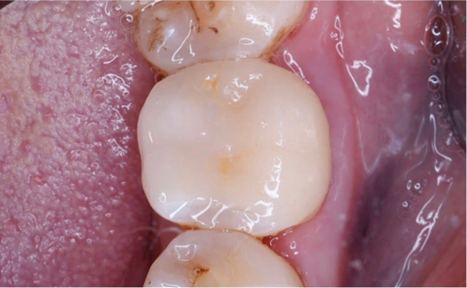
A table top is a type of restoration designed to replace the occlusal (chewing) surface of a tooth. A table top restoration is fabricated from high-quality ceramic material and is bonded directly onto the occlusal surface of a molar after minimal tooth preparation. Unlike a full-coverage crown, it does not require reducing the entire tooth, and unlike conventional fillings, it does not require extensive drilling. A table top restoration is a “just enough” solution for teeth with moderate damage.
3. WHEN SHOULD A TABLE TOP RESTORATION BE USED?
A table top restoration is an ideal treatment option in the following situations:
- Teeth with worn occlusal surfaces caused by bruxism, malocclusion, improper chewing habits, or acid erosion resulting from gastroesophageal reflux.
- Teeth with cracked or chipped occlusal surfaces, provided that the damage has not extended into the dental pulp or the root.
- Teeth that have undergone root canal treatment and have lost part of their occlusal structure but still retain strong roots and have no decay extending below the gum line.
- Restoration of a reduced occlusal vertical dimension or adjustment of the bite height in patients with occlusal imbalance.
A table top restoration is not recommended if the tooth has severe decay, fractures extending below the gum line, excessively weak remaining tooth structure, severe periodontal disease, or uncontrolled bruxism.
4. OUTSTANDING ADVANTAGES
- Maximum preservation of the natural tooth: Minimal tooth reduction, lowering the risk of pulp damage.
- High durability: Made from lithium disilicate ceramic with excellent strength and wear resistance.
- Excellent esthetics: Difficult to distinguish from a natural tooth.
- Less postoperative sensitivity and fewer complications: Due to its minimally invasive nature.
- Personalized and highly accurate design: Manufactured using CAD/CAM technology.
5. TREATMENT PROCEDURE
The procedure usually requires two appointments:
First appointment: Clinical examination, minimal occlusal reduction, digital impression using a 3D intraoral scanner, and placement of a temporary restoration.
Second appointment: Placement of the completed ceramic table top restoration and permanent bonding using a specialized dental adhesive.
In some cases, the restoration can be completed in a single day if an in-house CAD/CAM system is available.
6. POST-TREATMENT CARE
- Avoid eating hard foods or chewing with excessive force.
- Maintain good oral hygiene by brushing your teeth and using dental floss.
- Attend regular dental check-ups every six months.
7. COMPARISON WITH OTHER RESTORATIVE METHODS
| Criteria | Table Top | Dental Filling | Dental Crown |
|---|---|---|---|
| Tooth reduction | Very minimal | Almost none | Entire tooth |
| Durability | High (10+ years) | Moderate | Very high |
| Esthetics | High | Moderate | High |
| Cost | Moderate to high | Low to moderate | High |
| Number of appointments | 1–2 visits | 1 visit | 2–3 visits |
8. CONCLUSION
A table top restoration is a modern restorative solution that is minimally invasive, highly effective, and provides excellent esthetic outcomes, making it well suited for modern patients. If you are considering restoring a damaged tooth without removing a large amount of healthy tooth structure, consult your dentist to determine whether a table top restoration is the right treatment option for you.