

 13 August, 2026
Dental caries or extensive fracture of primary teeth can result in significant loss of tooth structure. In some cases, the lesion may progress deeper and involve the dental pulp.
This is particularly important for primary anterior teeth, where extensive structural damage may alter tooth morphology and affect both dental function and the esthetics of the child’s smile.
A clinical case at Nhu Ngoc Dental Clinic involved M.C., a 5-year-old child who presented with significant damage to two primary anterior teeth.
Dental Condition of M.C. at Presentation
Following clinical examination, the dentist noted:
- Tooth 51: Pulpitis with pulp hyperplasia
- Tooth 52: Extensive dental caries with significant loss of tooth structure
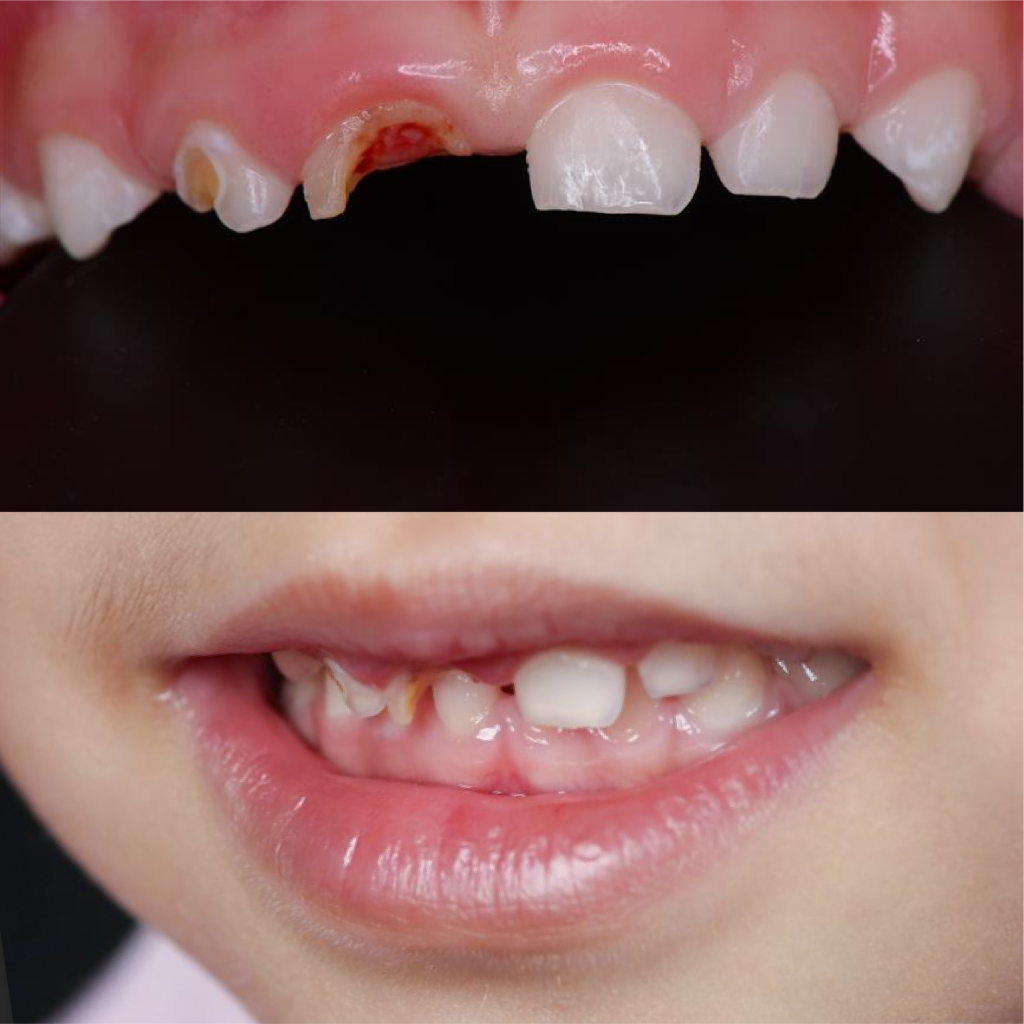
Before treatment
The treatment plan for each tooth was determined based on its clinical condition and pulpal status rather than applying the same treatment approach to both teeth.
Treatment and Restoration of the Two Primary Anterior Teeth
Following examination, the following treatments were performed:
Tooth 51: Pulp therapy followed by restoration with a pediatric zirconia crown.
Tooth 52: Restoration of the damaged tooth structure using composite resin.
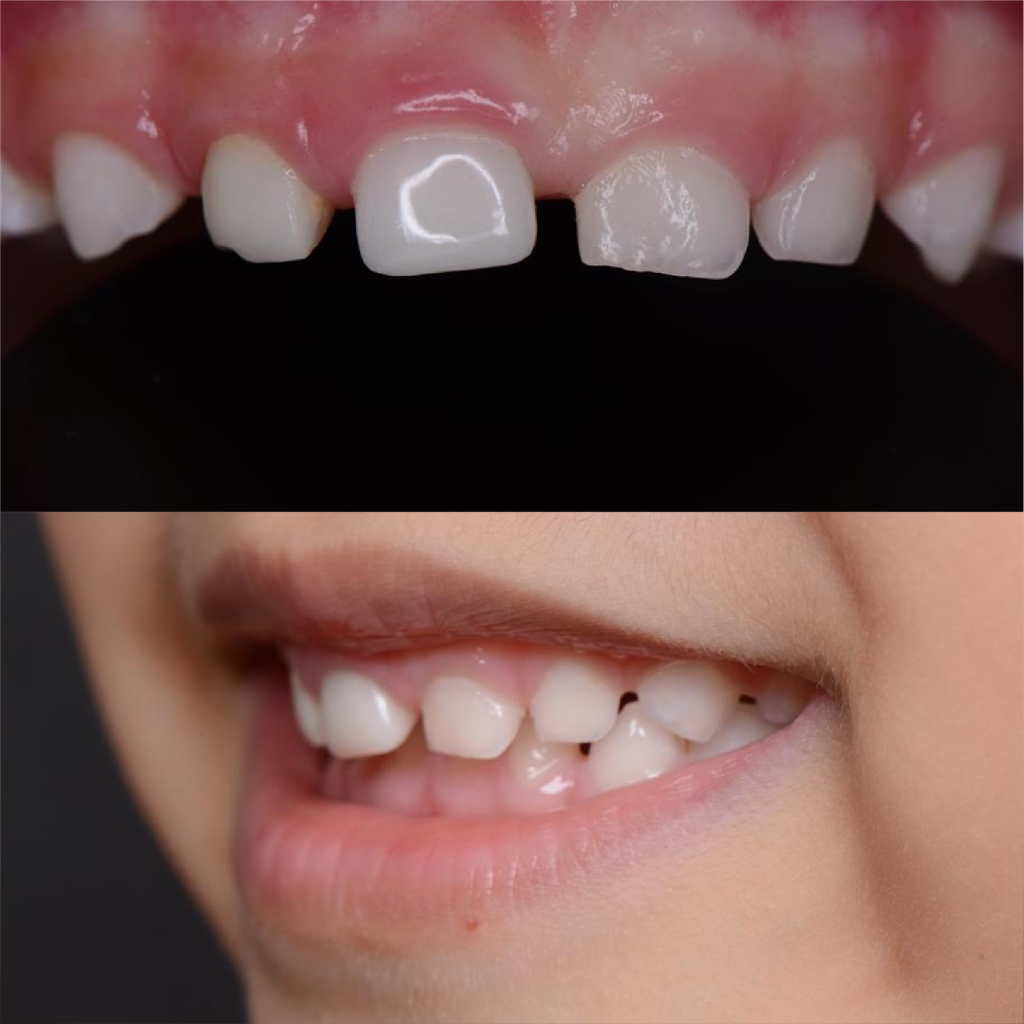
After treatment
Following completion of the restorations, the morphology of the two primary anterior teeth was reconstructed in accordance with their clinical condition.
In the treatment of primary teeth, the appropriate approach depends on pulpal status, the extent of tooth structure loss, and the restorability of the tooth. Not every carious primary tooth requires pulp therapy; when the pulp is involved, the treatment should be selected based on the specific clinical diagnosis.
For primary anterior teeth with extensive loss of tooth structure, restorative options may be considered to replace the missing tooth structure and maintain dental function. Composite resin is one of the materials that may be used for anterior restorations in children, while full-coverage crowns may also be considered depending on the individual clinical condition.
When Should Parents Take Their Child for a Dental Examination?
Parents should arrange a dental examination if they notice any of the following signs:
- A visible cavity or unusual discoloration of the tooth
- Chipping, cracking, or fracture of a tooth
- Toothache or discomfort during eating or chewing
- A tendency to chew predominantly on one side
- Swelling or other abnormal changes in the gingiva around the tooth
In particular, parents should not wait until their child develops pain before seeking dental care. Some carious lesions may not cause noticeable symptoms, while the extent of internal tooth damage can only be properly assessed through a clinical examination.
Primary Teeth Still Require Proper Care
Primary teeth remain in the oral cavity for a specific period and play important roles in mastication, speech, and the development of the dentition.
When a primary tooth is severely decayed or fractured, parents should arrange a dental examination so that the extent of the damage can be assessed and an appropriate treatment plan can be determined.
Early detection and appropriate treatment can help dentists preserve and restore primary teeth according to each child’s individual clinical condition.
Nhu Ngoc Dental Clinic