

 4 August, 2026
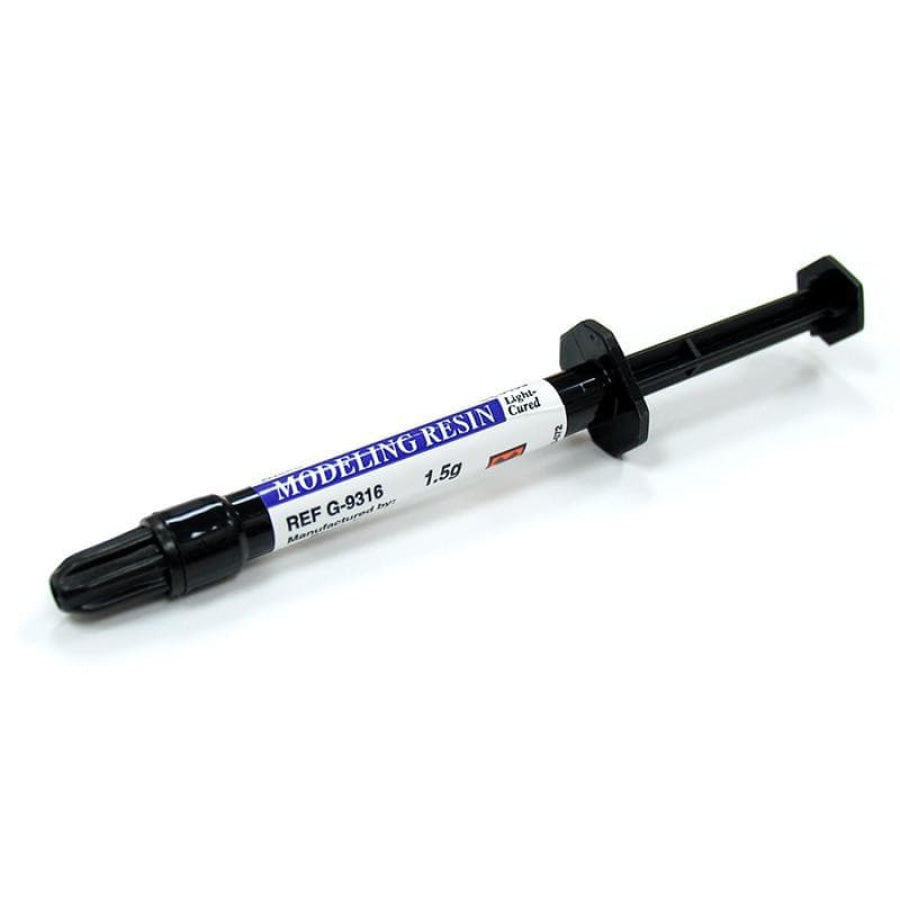
What Is Modeling Resin?
In modern esthetic dentistry, precise manipulation of composite resin is essential for achieving natural-looking and durable restorations. Traditionally, many clinicians have used dental adhesives to wet brushes or sculpting instruments in order to reduce composite stickiness during placement.
Modeling Resin in Composite Restorations: Why It Is Better Than Traditional Dental Adhesives
Today, however, Modeling Resin (Modeling Liquid) has become the preferred solution because it is specifically formulated to improve composite handling without compromising the physical or esthetic properties of the restoration.
Why Is Dental Adhesive No Longer the Ideal Wetting Agent?
Dental adhesives are designed to bond restorative materials to tooth structures—not to facilitate composite sculpting.
Using adhesives as lubricants presents several disadvantages:
- They contain volatile solvents such as ethanol or acetone, which evaporate rapidly and require repeated application.
- Their hydrophilic monomers may interfere with the surface characteristics of composite resin.
- Solvent evaporation can create microscopic voids that may affect restoration integrity.
- Excess adhesive may alter the composite’s mechanical properties and long-term color stability.
These limitations have encouraged manufacturers to develop dedicated modeling resins specifically for composite manipulation.
How Does Modeling Resin Work?
Modeling Resin is a solvent-free, low-viscosity resin formulated to be fully compatible with restorative composite materials.
When a very thin layer is applied to a brush or sculpting instrument, it creates a lubricating resin film between the instrument and the composite.
This allows clinicians to:
- Reduce composite stickiness during manipulation.
- Improve material adaptation and sculptability.
- Facilitate smooth layering in esthetic restorations.
- Achieve complete copolymerization with the composite during light curing, becoming an integral part of the restoration.
Because the resin polymerizes together with the composite, it does not form a separate layer or compromise restoration integrity.
Advantages of Modeling Resin
Compared with traditional adhesive lubricants, Modeling Resin offers several important clinical benefits.
Improved Handling
Composite becomes easier to manipulate, allowing greater precision and control during placement.
Smoother Restoration Surface
A thin layer of Modeling Resin helps create an exceptionally smooth final surface, reducing finishing and polishing time.
Superior Esthetics
After light curing, the resin becomes completely transparent, preserving the restoration’s original shade and translucency.
Excellent Material Compatibility
Modeling Resin is compatible with virtually all direct restorative composite systems currently available.
Better Layering Performance
It promotes seamless transitions between composite layers, minimizing visible layer boundaries and enhancing natural esthetic outcomes.
Important Clinical Considerations
Only a minimal amount of Modeling Resin should be used.
Excessive application may dilute the composite resin matrix, alter the resin-to-filler ratio, and negatively affect the long-term mechanical strength of the restoration.
Following the manufacturer’s recommendations ensures optimal handling while maintaining restoration durability.
Conclusion
Modeling Resin represents an important advancement in modern adhesive and esthetic dentistry. By significantly improving composite handling while preserving mechanical strength and optical properties, it has become an indispensable material for clinicians performing direct composite restorations.
At Nhu Ngoc Dental, we continuously adopt advanced restorative materials and evidence-based treatment protocols to deliver highly esthetic, durable, and predictable outcomes for every patient.