

 23 July, 2026
Proper post-operative care after tongue-tie release surgery can help promote faster wound healing, reduce the risk of reattachment, and support the effective recovery of tongue movement.
Tongue-tie, or ankyloglossia, is a relatively common condition in children, but not all parents are able to recognize it. Some children may experience difficulties with breastfeeding, unclear speech, restricted tongue movement, or problems with chewing and eating later in life.
According to some studies, approximately 34% of infants experiencing breastfeeding difficulties have tongue-tie. In many cases, tongue-tie release surgery can significantly improve tongue function. However, treatment outcomes do not depend on the surgery alone. Post-operative care also plays an important role in the recovery process.
Proper care can help promote wound healing, relieve discomfort, reduce the risk of reattachment, and support the best possible recovery of the tongue’s range of motion.
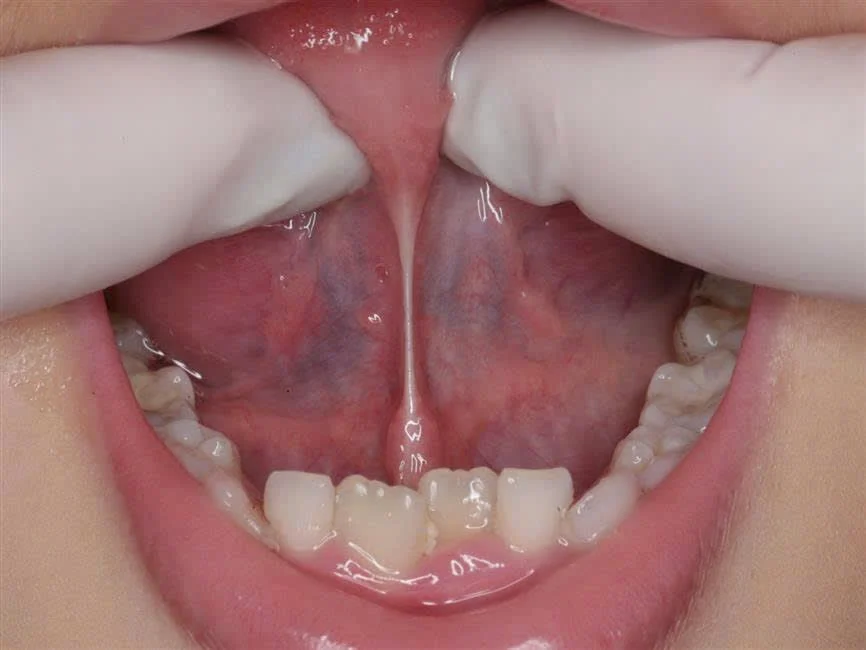
Image showing tongue-tie in a child before surgical release. Photo: VTNN.
What Is Tongue-Tie?
The lingual frenulum is a band of soft tissue located beneath the tongue. It connects the tongue to the floor of the mouth and helps support tongue movement.
When the frenulum is unusually short, thick, or attached abnormally, a child may have tongue-tie (ankyloglossia), which can restrict tongue movement. Children may have difficulty sticking their tongue out, lifting it to touch the roof of the mouth, or may have a heart-shaped tongue tip when extending the tongue.
In infants, tongue-tie may cause difficulty breastfeeding, prolonged feeding, poor weight gain, or nipple pain for the mother during breastfeeding. In older children, tongue-tie may affect the pronunciation of certain sounds that require flexibility of the tongue tip, such as “t,” “l,” “ch,” “d,” and “r.”
However, the relationship between tongue-tie and speech disorders remains controversial. Tongue-tie may also make oral hygiene or eating more difficult. In some cases, it may affect oral development, contribute to tooth misalignment, create a gap between the lower front teeth, and increase the risk of inflammation or gum recession on the inner side of the lower jaw.
When Does a Child Need Surgery?
Not every child with tongue-tie requires surgery.
The decision to intervene is based not only on the appearance of the frenulum, but also on the degree of restricted tongue movement and how the condition affects functions such as breastfeeding, eating, speech, or oral hygiene.
The doctor will conduct a comprehensive evaluation and may consider surgical intervention in the following cases:
- Infants who experience difficulty breastfeeding, ineffective feeding, or poor weight gain.
- Children with significant restriction of tongue movement. The tongue may only move from side to side and may be unable to lift upward to reach the desired area. The tip of the tongue may also appear V-shaped when the child cries, potentially affecting speech or chewing.
- Tongue-tie that interferes with oral hygiene or makes normal tongue movements difficult.
- Cases in which surgery is clinically indicated following an assessment by a dental specialist or speech and language therapist.
The most favorable timing for surgery is often before 6 months of age to help minimize potential effects on future speech and chewing functions.
The procedure is generally relatively quick and minimally invasive. Depending on the individual case, it may be performed using scissors, electrosurgery, or a laser. Laser treatment is now commonly used in many cases because it typically involves less bleeding, reduces post-operative discomfort, and may support the healing process.
Guidelines for Caring for Children After Tongue-Tie Release Surgery
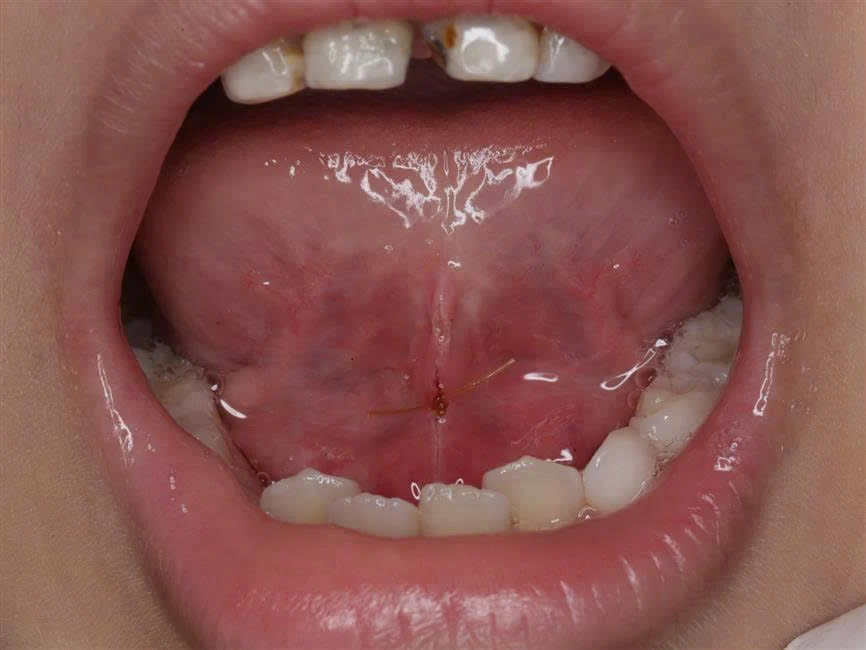
Image showing the surgical site after tongue-tie release, with the sutured wound in the healing phase. Photo: VTNN.
After surgery, children typically experience only mild pain or discomfort during the first few days. Parents should take note of the following important guidelines:
1. Monitor the child’s pain and properly care for the treatment area
Ensure that your child takes all prescribed medications as directed by the doctor, including the correct dosage and schedule. Do not give antibiotics or other pain relievers without medical guidance.
In general, antibiotics are not routinely used after laser surgery. A topical anti-inflammatory medication may be prescribed if necessary. A white or pale-yellow layer may appear over the surgical site during the first few days. This is usually normal healing tissue and is not necessarily a sign of infection.
Parents should closely monitor the child’s recovery and prevent the child from chewing or biting hard objects to reduce the risk of bleeding. Children should also be discouraged from touching the surgical area with their hands to help prevent infection.
If absorbable sutures are used, there is usually no need to bring the child back for suture removal, as the sutures will dissolve naturally over time.
For children who already have teeth, parents should also prevent them from biting their tongue. During the first few hours after surgery, residual numbness from the anesthetic may cause discomfort, and children may accidentally bite their tongue, resulting in sores. Parents or caregivers should closely supervise the child during this period.
2. Follow an appropriate diet
During the first 1–3 days, offer soft, cool, or mildly warm foods such as porridge, soup, yogurt, smoothies, or other easy-to-swallow foods.
Avoid foods that are too hot, spicy, hard, or sharp, as they may cause pain and irritate the wound. Encourage your child to drink enough water to help keep the mouth clean.
3. Maintain good oral hygiene
Keeping the mouth clean helps reduce the risk of infection. During the first 24 hours after surgery, vigorous rinsing should be avoided.
Older children may rinse their mouths gently according to the doctor’s instructions. Use a soft-bristled toothbrush to clean the teeth, taking care to avoid the surgical wound.
For younger children, parents should gently clean the mouth using clean gauze or a soft-bristled toothbrush, avoiding strong contact with the surgical area.
4. Perform tongue mobility exercises – an important step in preventing reattachment
For older children, exercises typically begin 24–48 hours after surgery, according to the doctor’s instructions.
Children may practice exercises such as:
- Sticking the tongue out and pulling it back in;
- Touching the upper lip, lower lip, and both corners of the mouth with the tongue;
- Lifting the tongue as far as possible toward the roof of the mouth;
- Practicing sounds such as “la – na – ta – da.”
The recommended frequency is 3–5 times per day, for 5–10 minutes each time.
These exercises help reduce the risk of reattachment and improve the range of tongue movement.
For younger children, the area beneath the tongue should be kept clean, and the tongue should be gently lifted during care as instructed by the doctor.
5. Monitor your child’s condition regularly
Parents should observe their child’s recovery closely to identify any unusual signs as early as possible.
Take your child for a follow-up examination or contact the doctor if there is persistent bleeding, high fever, significantly worsening pain, prolonged refusal to eat, or unusual swelling and redness.
6. Attend follow-up appointments
A follow-up appointment is typically scheduled 5–7 days after surgery.
If non-absorbable sutures were used, they may be removed during the follow-up visit. The appointment also allows the doctor to evaluate wound healing and tongue function.
Tongue-tie release is a minimally invasive procedure that, when appropriately indicated, may significantly improve a child’s ability to breastfeed, eat, move the tongue, and speak.
However, family involvement in post-operative care is essential for achieving optimal treatment outcomes. Following the doctor’s instructions regarding medication, oral hygiene, diet, tongue mobility exercises, and scheduled follow-up visits can help promote faster wound healing, reduce the risk of reattachment, and support the best possible recovery of tongue function.
Source: Nông Nghiệp & Môi Trường Newspaper: https://nongnghiepmoitruong.vn/cham-soc-tre-sau-phau-thuat-cat-phanh-luoi-ngan-dung-cach
Prof. Dr. Võ Trương Như Ngọc – Dr. Trần Thuận