

 24 October, 2026
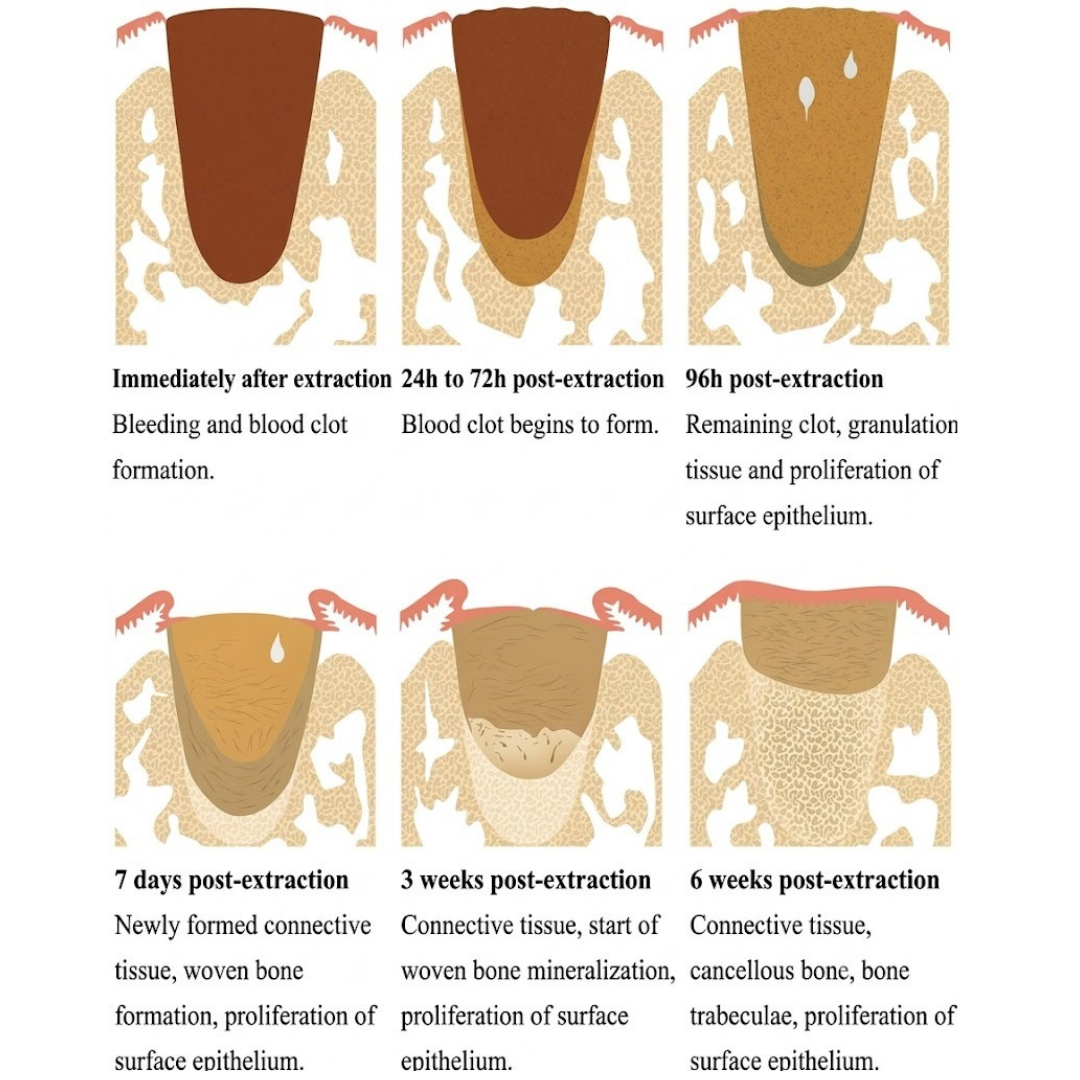
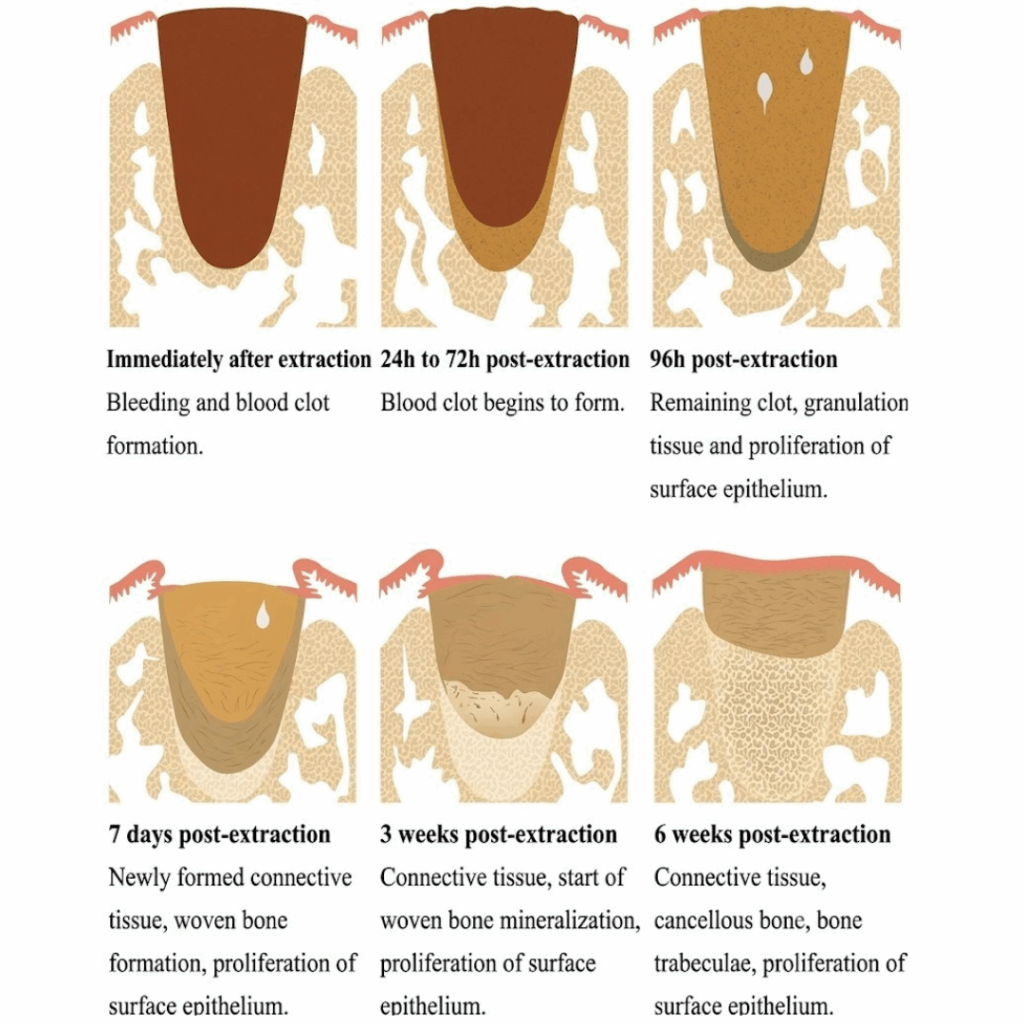
1. Blood Clot Formation (First 24 Hours)
– A blood clot forms at the extraction site, helping protect the wound.
– Avoid spitting, vigorous rinsing, or using a straw to prevent dislodging the blood clot.
2. Soft Tissue Healing (7–14 Days)
– After approximately one week, the gum tissue begins to close over the wound.
– If stitches are used, they are usually removed after 7–10 days, unless dissolvable stitches are used.
3. Bone Healing (1–6 Months)
– The jawbone gradually regenerates and fills in the extraction socket over approximately 1–3 months following a routine wisdom tooth extraction.
– If the extraction is complex or extensive bone removal is required, bone healing may take 3–6 months.
Important Notes
– During the first 3 days, swelling and pain may occur. Take painkillers and antibiotics only as prescribed by your dentist.
– If pain persists, excessive bleeding occurs, or a foul odor develops at the extraction site, you may have dry socket or an infection and should return for a dental examination.
– Avoid hard, hot, and spicy foods during the first week to prevent irritation of the wound.
After wisdom tooth extraction, you can apply the following measures to relieve pain promptly and manage discomfort effectively:
1. Cold Compress (During the First 24 Hours)
– Apply an ice pack to the outside of your cheek near the extraction site for 15–20 minutes at a time, then take a 10-minute break before repeating.
– Repeat several times throughout the first day to help reduce swelling and discomfort.
2. Take Pain Medication as Prescribed
– Paracetamol: Helps relieve mild to moderate pain.
– Ibuprofen (or other NSAIDs): Helps relieve pain and inflammation. Take it with food to reduce stomach irritation. A stomach-protective medication may be needed in some cases, depending on your medical history and your dentist’s advice.
– Stronger pain medications (such as celecoxib or ketorolac): May be prescribed for more severe pain when appropriate.
3. Choose a Reputable Dentist and a Minimally Traumatic Extraction Technique
– Minimizing trauma to the gum tissue and alveolar bone, combined with the dentist’s expertise, can help make the extraction procedure more comfortable and reduce postoperative pain and discomfort.