

 1 October, 2026
Composite Crowns / Strip Crowns for Primary Teeth
Composite crowns / strip crowns are an aesthetic restorative treatment used to restore primary teeth that have lost a significant amount of tooth structure. This technique can provide better durability than conventional composite fillings because the composite material is reinforced as a single unit. However, the technique is relatively challenging and requires a proper clinical procedure to achieve the best possible results.
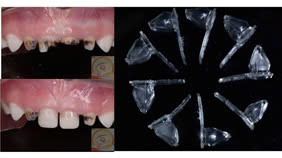
Strip Crowns / Composite Crowns
[INSERT IMAGE – Main image: Strip Crowns / Composite Crowns]
Steps of the Strip Crowns Technique
1. Oral Hygiene
Parents should be instructed on proper oral hygiene for their child before treatment. If the child has gingival inflammation, it may interfere with the setting of the restorative material, potentially causing discoloration of the crown due to bleeding or resulting in an inadequate seal of the restoration.
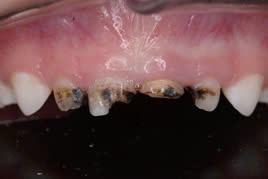
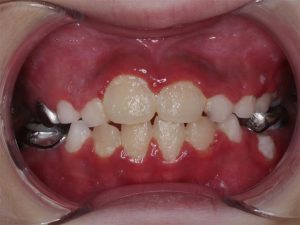
Healthy, non-inflamed gingiva, suitable for Strip Crowns
2. Intraoral and Extraoral Photographs Before Treatment
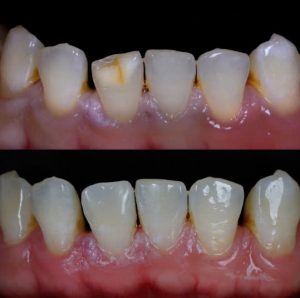
Dental photographs should be taken before and after each procedure to document the initial condition and evaluate the effectiveness of the treatment.
3. Composite Shade Selection
As with conventional composite restorations, selecting a composite shade that matches the natural tooth is essential to achieving an aesthetic result. For primary teeth, lighter shades such as A1 and A2 are commonly used.

Composite shade guide
4. Measuring Tooth Size and the Interproximal Space
The mesiodistal width of the tooth is measured to select the appropriate strip crown size.
5. Tooth Isolation
A hole is made approximately 6–7 mm from the edge of the rubber dam sheet so that the rubber dam can extend into the gingival margin. Dental floss may not be necessary. It is recommended to isolate one tooth at a time when placing the crowns.
6. Caries Removal
Soft and infected dentin is removed from the tooth. If pulp capping or root canal treatment is indicated, it should be completed before placing the crown.
7. Preparing the Strip Crown
After selecting the appropriate size, two holes are made at the incisal edge of the strip crown, on the mesial and distal sides, to prevent air bubbles during placement. The edges of the crown are trimmed with scissors to follow the cervical contour so that the crown fits closely around the cervical margin of the tooth. The crown is then tried in the mouth to check its fit.

Strip crowns
8. Etching and Bonding
The appropriate etching and bonding system should be used according to the composite manufacturer’s recommendations. Light-cure the bonding agent for 20 seconds.
9. Placing Composite into the Strip Crown
Composite is injected into the selected strip crown and light-cured. Excess composite material is then removed. A No. 11 or No. 15 blade is used to make a longitudinal cut along the crown, after which a dental explorer is used to remove the strip crown.
10. Polishing and Finishing
The composite restoration is polished. The rubber dam is removed, and the restoration is polished again as needed.
Post-treatment photographs are taken.
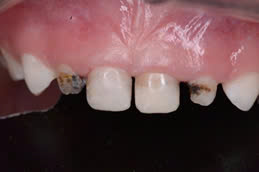
Final result after treatmen
Parents’ Note: If your child’s primary teeth have extensive tooth decay, chips, or discoloration, please take your child to a dental clinic as soon as possible for an examination and timely restorative treatment.