

 11 June, 2026
Midline Diastema in Children Aged 6–12: A Warning Sign of Impacted Supernumerary Teeth (Mesiodens)
The mixed dentition stage between 6 and 12 years old is widely considered the “golden window” for shaping a child’s future smile. However, many parents who notice a large gap between their child’s front teeth often brush it off, assuming that “the teeth haven’t all come in yet, so they haven’t closed up.”
In reality, this gap can be a crucial warning sign pointing to the presence of an impacted supernumerary tooth (mesiodens)—an extra tooth “hidden” inside the jawbone that can trigger severe orthodontic alignment issues if left unaddressed.
1. What is an Impacted Supernumerary Tooth (Mesiodens)?
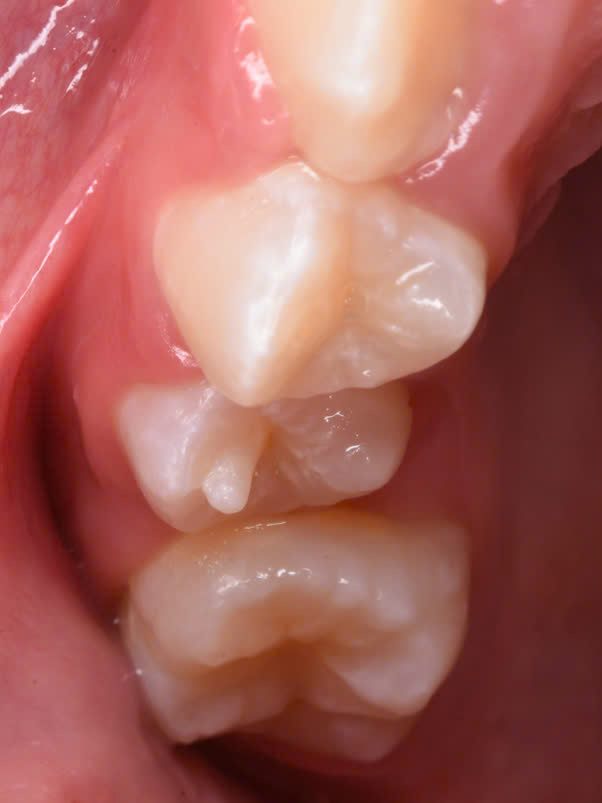
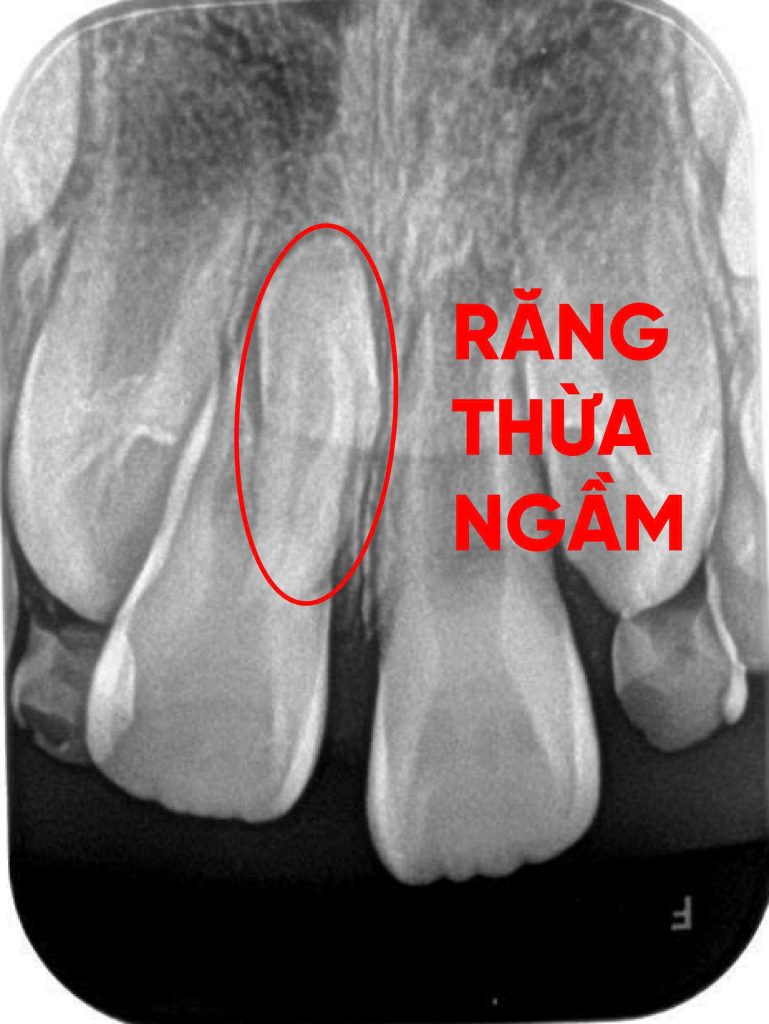
An impacted supernumerary tooth is an extra tooth bud that develops inside the jawbone but fails to erupt into the mouth like a normal tooth. The most common anatomical site for this anomaly is right at the midline or directly behind the two maxillary central incisors (upper front teeth).
Because they are “hidden” beneath the gums, these teeth silently act as a mechanical barrier. They block permanent teeth from migrating into their correct positions, resulting in abnormally wide structural gaps or severely misaligned front teeth.
2. Home Care Signs: Spotting the “Hidden Culprit”
Parents can monitor their child’s smile to intercept potential warning signs early:
-
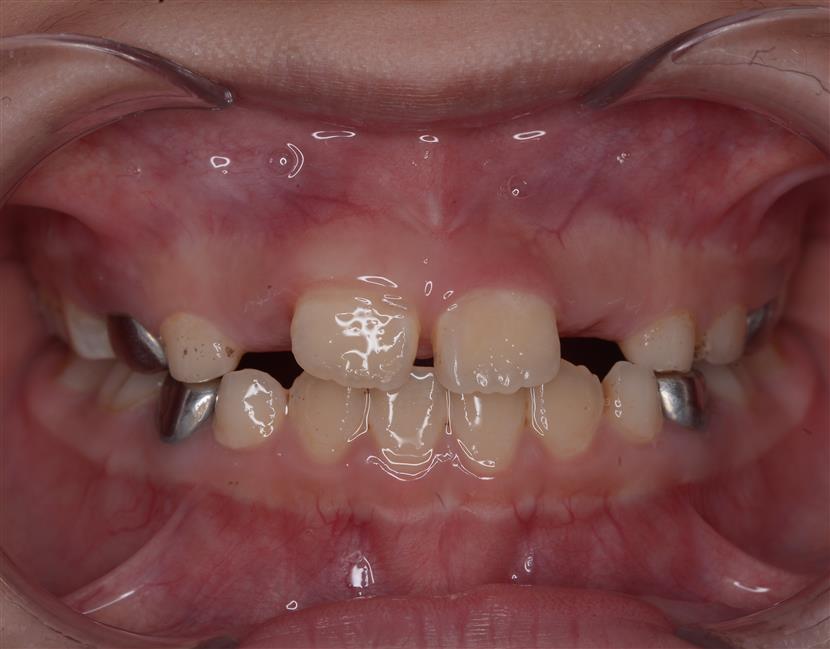
Abnormal Midline Diastema: The two central incisors erupt but remain far apart (typically mm) with no tendency to close naturally over time.
-
Malpositioned or Rotated Teeth: One or both central incisors erupt tilted, rotated along their axis, or flared outward due to pressure from the underlying impacted tooth.
-
Delayed Eruption of Permanent Teeth: One front tooth has fully erupted, but the opposite side shows no sign of emerging long after its natural eruption timeline.
-
Palatal / Gingival Bulge: Feeling a hard, bony lump or swelling along the roof of the mouth (palate) or directly behind the front teeth.
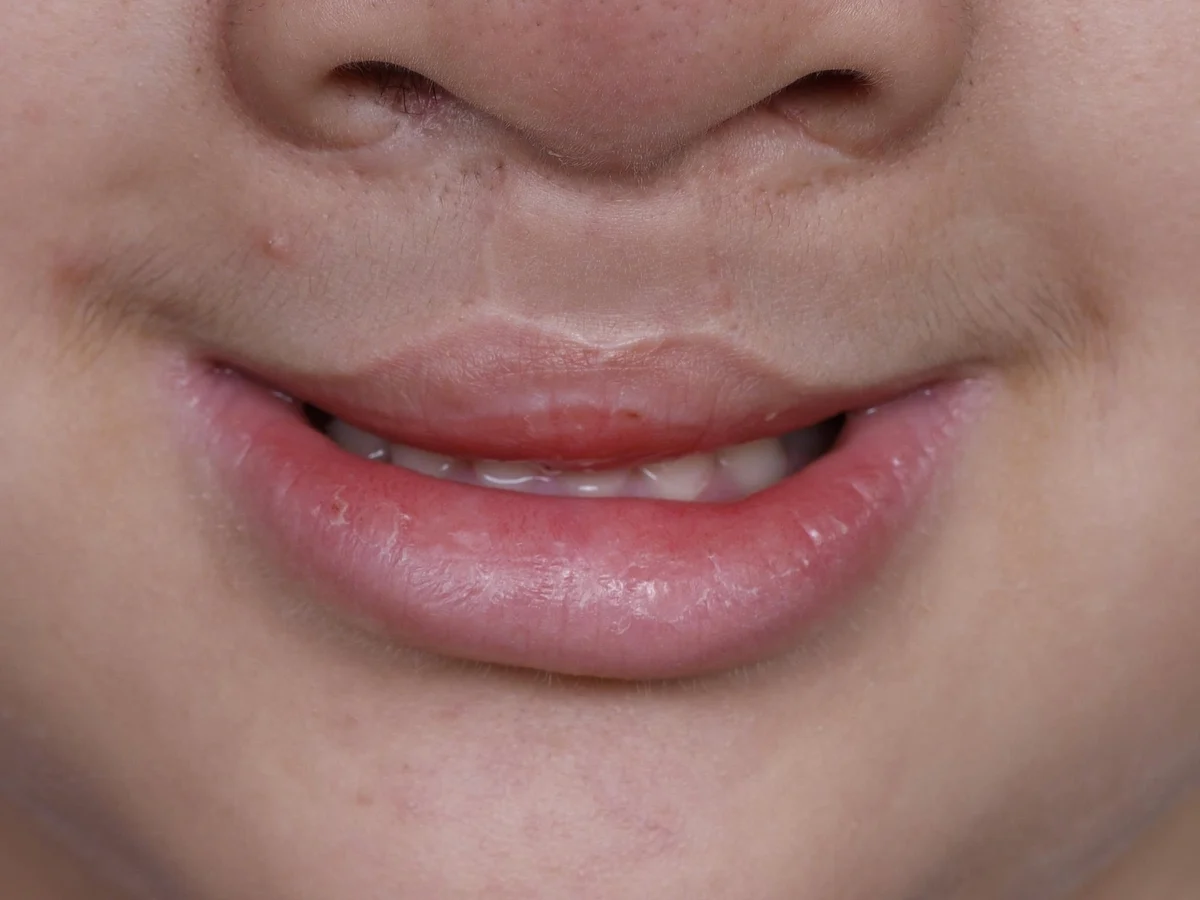
[Caption] Anterior midline diastema in children during the mixed dentition stage (Ages 6–12).
3. The “Hidden” Consequences of Delayed Treatment
If left undetected and unmanaged, an impacted mesiodens causes far more than just a cosmetic deficit; it can lead to a host of complex clinical complications:
-
Full-Arch Malalignment: The extra tooth occupies valuable space, forcing succeeding permanent teeth to erupt crowded, rotated, or completely out of place, leading to severe malocclusion (a misaligned bite).
-
Compromised Chewing and Speech: An unstable bite pattern diminishes the child’s ability to grind food effectively and can alter proper speech articulation.
-
Risk of Dentigerous Cysts: Over time, an impacted tooth can stimulate the formation of a follicular or dentigerous cyst, resulting in localized jawbone resorption (bone loss) and undermining the roots of adjacent healthy teeth.
-
Escalated Orthodontic Costs: Postponing the extraction of a supernumerary tooth frequently transforms what could have been a simple case into a lengthy, highly complex orthodontic journey, multiplying treatment times and financial costs.
4. Treatment Solutions: Surgical Extraction to Liberate the Smile
At a specialized dental practice, managing an impacted mesiodens is a highly controlled, safe, and routine pediatric procedure:
-
Clinical Examination & Digital Imaging (X-ray / CT Cone Beam): This is the most critical diagnostic phase. It allows the clinician to map out the exact position, orientation, and proximity of the extra tooth relative to the roots of the adjacent permanent teeth.
-
Minimally Invasive Surgical Extraction: The dentist performs a minor oral surgery to carefully remove the supernumerary tooth. Utilizing modern pediatric techniques, the procedure is rapid, atraumatic, and highly comfortable for the child.
-
Post-Operative Monitoring & Interceptive Orthodontics: Once the mechanical blockage is removed, permanent teeth often begin moving toward their correct alignment naturally. In some instances, the doctor will implement simple interceptive orthodontic appliances to help guide the teeth and close the diastema completely.
5. Expert Advice
Do not wait until your child’s teeth are severely crooked or misaligned before scheduling a dental visit. Scheduling a baseline preventive screening every 6 months is the absolute best strategy to protect your child’s oral development.
Our core message to parents: “A simple diagnostic X-ray taken today can save your child from an arduous, multi-year orthodontic ordeal in the future.”
Are you concerned about a noticeable gap between your child’s front teeth?
Contact our expert dental team today to schedule a professional evaluation and a complimentary diagnostic imaging checkup. Do not let hidden teeth steal your child’s confidence and radiant smile!
Nhu Ngoc Dental Clinic