

 21 July, 2026
Congenitally Missing Teeth – What Parents Need to Know Early
Congenitally missing teeth is a condition in which one or more teeth fail to develop from the embryonic stage. This is a relatively common developmental abnormality of the teeth in children. If it is not detected and appropriately monitored, this condition may have long-term effects on chewing function, speech ability, facial aesthetics, and the development of the bite.
Many parents only recognize the abnormality when they notice that their child’s teeth are erupting late or that the process of tooth replacement is not occurring at the expected time. Nevertheless, early detection plays an extremely important role in developing an optimal treatment plan and minimizing potential complications later on.
1. What Are Congenitally Missing Teeth?
Congenitally missing teeth, also known as hypodontia or congenital missing teeth, is a condition in which the tooth bud fails to form, resulting in the tooth not erupting into the dental arch.
This condition may occur in:
- Primary teeth.
- Permanent teeth.
- One tooth or multiple teeth.
The absence of 1 to 5 teeth is generally defined as hypodontia; the absence of 6 or more teeth is referred to as oligodontia; meanwhile, the complete absence of all teeth is an extremely rare condition known as anodontia.
In clinical practice, congenitally missing permanent teeth are significantly more common than congenitally missing primary teeth.
2. The Teeth Most Commonly Missing
The tooth positions with the highest risk of congenital absence include:
- The upper lateral incisors.
- The second premolars.
- The lower incisors.
- The wisdom teeth.
Among Vietnamese children and Asian children in general, the most commonly missing teeth are the upper lateral incisors and the second premolars.
3. Causes of Congenitally Missing Teeth
3.1. Genetic Factors
This is considered one of the most important causes. Numerous studies have demonstrated that missing teeth may have a familial pattern and are closely associated with genes responsible for regulating the development of tooth buds, including:
- MSX1
- PAX9
- AXIN2
If either the father or mother has experienced congenitally missing teeth, the child may also face a higher risk of developing the same condition.
3.2. Systemic Syndromes
The presence of multiple missing teeth in a child may be associated with certain medical syndromes, such as:
- Ectodermal dysplasia.
- Down syndrome.
- Cleft lip and palate.
3.3. Other Factors
In addition, certain factors occurring during pregnancy or in the early postnatal period may negatively interfere with the development of tooth buds:
- Infections.
- Endocrine disorders.
- Early chemotherapy or radiotherapy.
- Injuries to the maxillofacial region.
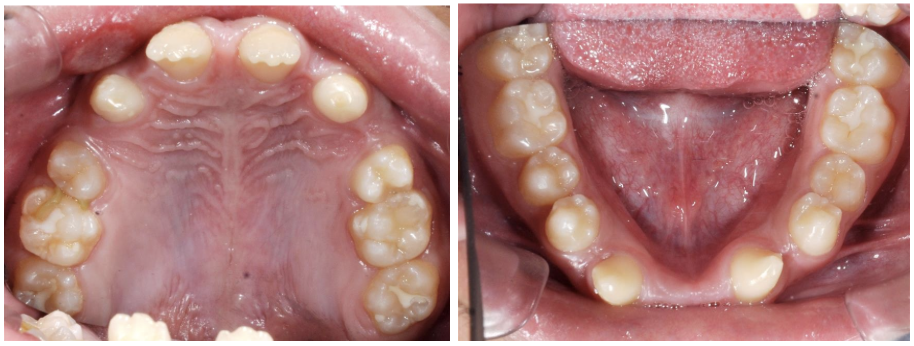
4. Signs Parents Should Pay Attention To
Parents should proactively take their child for an examination at Nhu Ngoc Dental Clinic when observing the following signs:
- Abnormally delayed tooth eruption.
- The child has reached the age of tooth replacement, but no permanent tooth has erupted.
- Gaps between teeth remain for an unusually long period.
- Primary teeth remain in the dental arch for too long.
- The two sides of the dental arch develop unevenly or asymmetrically.
In many actual cases, children experience no pain or discomfort at all, making it very easy for parents to overlook the condition.
5. How Do Congenitally Missing Teeth Affect Children?
5.1. Effects on Chewing Function
Missing teeth reduce the effectiveness of food grinding and may also cause children to develop a habit of chewing predominantly on one side.
5.2. Effects on Speech
Especially when the missing teeth are located in the anterior region, children may have difficulty pronouncing certain sounds clearly, such as “s,” “x,” and “ch.”
5.3. Effects on Aesthetics and Psychological Well-Being
Gaps caused by missing teeth in the front teeth region may cause children to:
- Lose confidence.
- Feel self-conscious and uncomfortable when smiling.
- Experience negative effects on everyday social interactions.
5.4. Effects on Bite Development
Without appropriate medical monitoring:
- Adjacent teeth may tend to tilt toward the space left by the missing tooth.
- The opposing tooth may over-erupt.
- The available space in the dental arch may become narrowed.
- Complex malocclusions may develop in the future.
6. Diagnosis of Congenitally Missing Teeth
To make an accurate diagnosis, dentists at Nhu Ngoc Dental Clinic may combine the following methods:
- Clinical examination.
- Close monitoring of tooth eruption milestones.
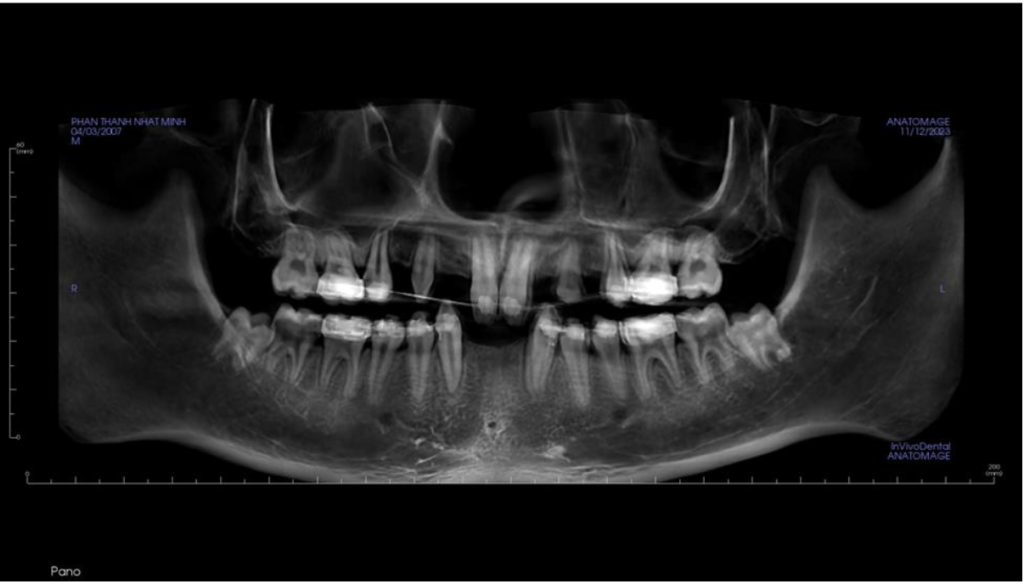
- Panoramic X-ray imaging.
X-ray images help clearly determine:
- Whether the tooth bud is present.
- The position and eruption direction of the tooth.
- Other associated abnormalities in the dentition.
In general, from around the age of 6–7, X-ray imaging can clearly detect many cases of congenitally missing permanent teeth.
7. Treatment of Congenitally Missing Teeth
The specific treatment approach will be based on:
- The number of missing teeth.
- The location of the missing teeth.
- The child’s current age.
- The condition of the bite.
Common treatment options include:
- Long-term monitoring and preservation of primary teeth: If the primary tooth remains in good condition, the dentist may recommend retaining it to maintain chewing function and preserve the space in the dental arch.
- Orthodontic treatment: This helps close the space left by missing teeth, realign the dental arch, and prepare an appropriate space for subsequent restorative procedures.
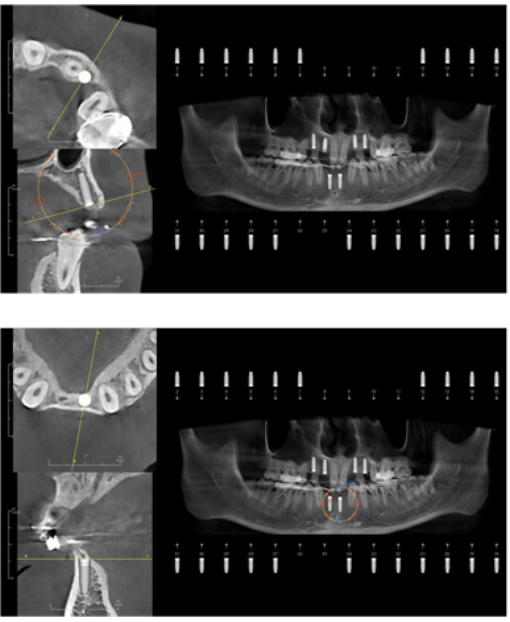
- Dental restoration: At an older age, treatment options such as dentures, dental bridges, or dental implants may be considered. Implant treatment is generally indicated only when the jawbone structure has developed to a relatively complete level.
8. The Importance of Early Detection
Early detection and intervention offer many benefits:
- Timely and appropriate monitoring of dental arch development.
- Prevention of space loss caused by tooth shifting.
- Reduction of the need for complex treatment in the future.
- Preservation of aesthetics and psychological well-being for the child.
- Development of a comprehensive interdisciplinary treatment plan.
Therefore, maintaining the habit of regular dental check-ups from an early age, particularly during the period of tooth replacement between the ages of 6 and 12, is extremely important.
Conclusion
Congenitally missing teeth is a relatively common developmental abnormality of the teeth, yet it is often detected late. This condition does not merely affect aesthetics but can also negatively impact chewing function, speech ability, and the development of the bite in children. Parents should pay particular attention to signs of delayed tooth eruption or abnormal tooth replacement and proactively take their children for regular dental examinations at Nhu Ngoc Dental Clinic for timely diagnosis and monitoring. Early intervention is the key to helping children achieve optimal chewing function and aesthetics in the future.