

 2 June, 2026
Tooth loss not only affects aesthetics but also impairs chewing function, leads to alveolar bone resorption, and can have long-term effects on overall health. Among today’s restorative treatment options, dental implants are considered the most optimal and long-lasting solution.
However, for an implant treatment to be successful and durable over time, the key factors lie in the dentist’s expertise, the treatment protocol, and the technological infrastructure.
According to Prof. Dr. Vo Truong Nhu Ngoc, the goal of dental implant treatment is not merely to replace a missing tooth but to restore chewing function, aesthetics, and the patient’s long-term quality of life.
Dental implant placement is an invasive procedure that requires dentists not only to possess a thorough understanding of oral and maxillofacial anatomy but also to be capable of managing complex situations such as bone deficiency, low maxillary sinus anatomy, and patients with systemic health conditions.
For a procedure to achieve long-term success, the dentist’s expertise is the most crucial factor. The clinician must have a comprehensive understanding of anatomy to guide implant placement while avoiding critical structures such as the inferior alveolar nerve and the maxillary sinus. Sufficient experience is also required to manage cases involving severe bone loss. Even a one-millimeter error in assessing bone density or implant positioning may significantly increase the risk of implant failure or nerve injury.
In addition, advanced equipment plays a vital role in supporting accurate diagnosis and treatment planning. Cone Beam CT (CBCT) imaging enables clinicians to visualize bone structures in three dimensions, while surgical guide technology helps achieve highly precise implant placement, minimizing invasiveness and patient discomfort.
Finally, a strict sterilization protocol is essential for preventing peri-implant infections and ensuring long-term treatment success.
Combining Professional Expertise with High-Quality Materials
Nhu Ngoc Dental Clinic is one of the dental centers that places significant emphasis on two important factors: professional expertise and the quality of materials used.
From a professional standpoint, treatment plans are generally developed comprehensively, with interdisciplinary collaboration when necessary. Most dentists hold postgraduate qualifications, have received formal training, and possess strong academic backgrounds. Some also teach or practice at major central hospitals, allowing them to regularly update their clinical knowledge and skills. Case consultations and cross-supervision among dentists are also implemented to reduce risks and determine the most appropriate treatment approach for each patient.
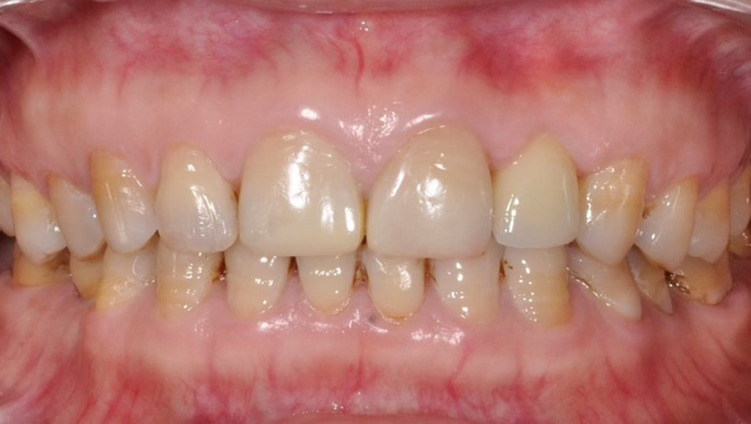
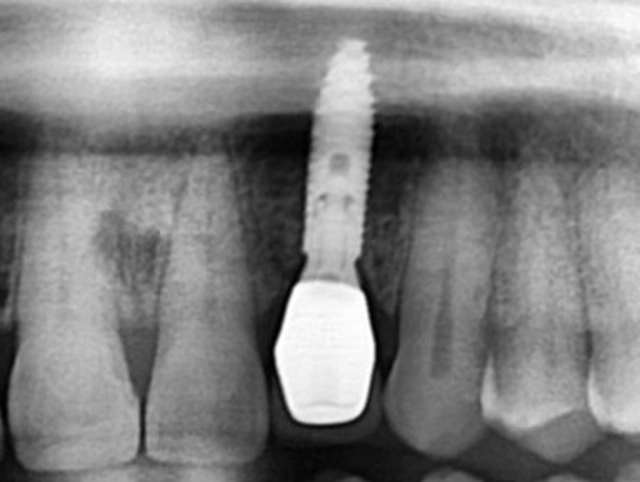
Natural-looking implant restoration in the aesthetic zone at Nhu Ngoc Dental Clinic (21 Tran Quang Dieu Street, Hanoi).
Regarding materials and equipment, the clinic prioritizes implant systems and dental materials from reputable manufacturers with clearly established standards for safety and durability. Information related to implant fixtures, including their origin, production batch, and treating dentist, is routinely documented and can be traced when necessary, enhancing transparency throughout the treatment process.
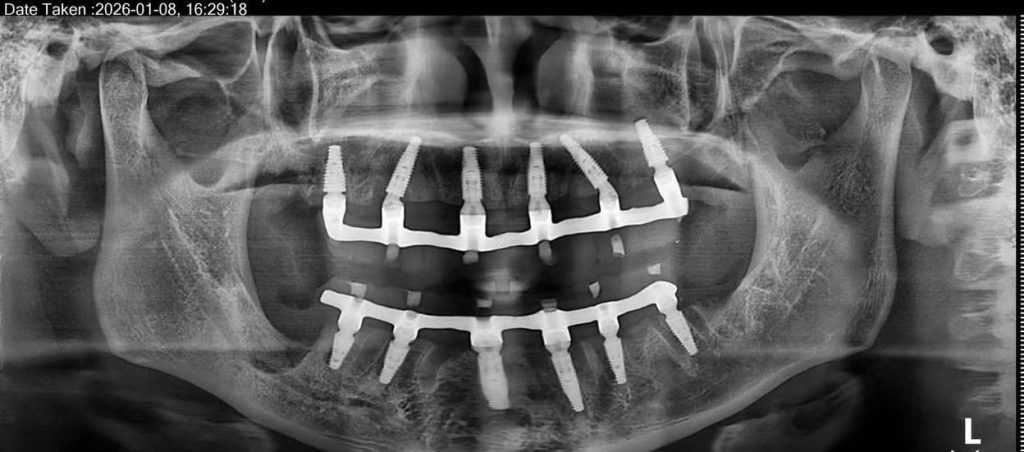
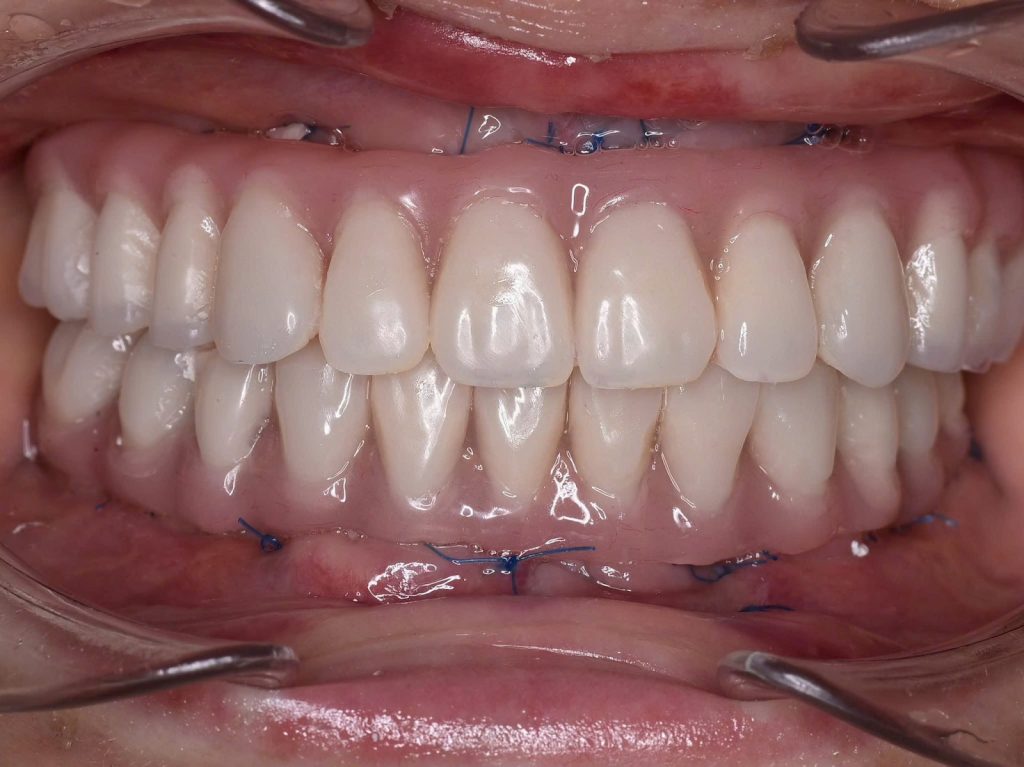
Full-arch implants with immediate teeth restoration after 24 hours at Nhu Ngoc Dental Clinic, Hanoi.
In addition, digital technology has been integrated into patient record management. X-rays, clinical photographs, and treatment plans are comprehensively stored, enabling dentists to monitor treatment progress while allowing patients to better understand their oral health condition.
Overall, the clinic’s operating model aligns with current trends in modern dentistry: comprehensive treatment planning, evidence-based clinical practice, and transparent communication to facilitate patient understanding and cooperation throughout treatment.
Advanced Digital Technologies in Implant Dentistry
Digital technology is also deeply integrated into treatment planning and surgical procedures:
Personalized Surgical Guides
Customized surgical guides are fabricated specifically for each patient to assist dentists in placing implants in the planned position. During surgery, the clinician simply drills through the predetermined guide sleeves on the template.
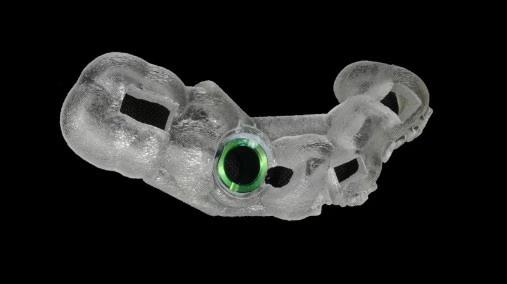
Patient-Specific Surgical Guide
Dynamic Navigation System (DNS)
The Dynamic Navigation System allows dentists to monitor the position, angulation, and depth of the drill in real time throughout the procedure. This technology ensures a high degree of accuracy and minimizes the risk of damaging critical anatomical structures, particularly in complex cases, highly precise procedures, or aesthetically demanding areas.
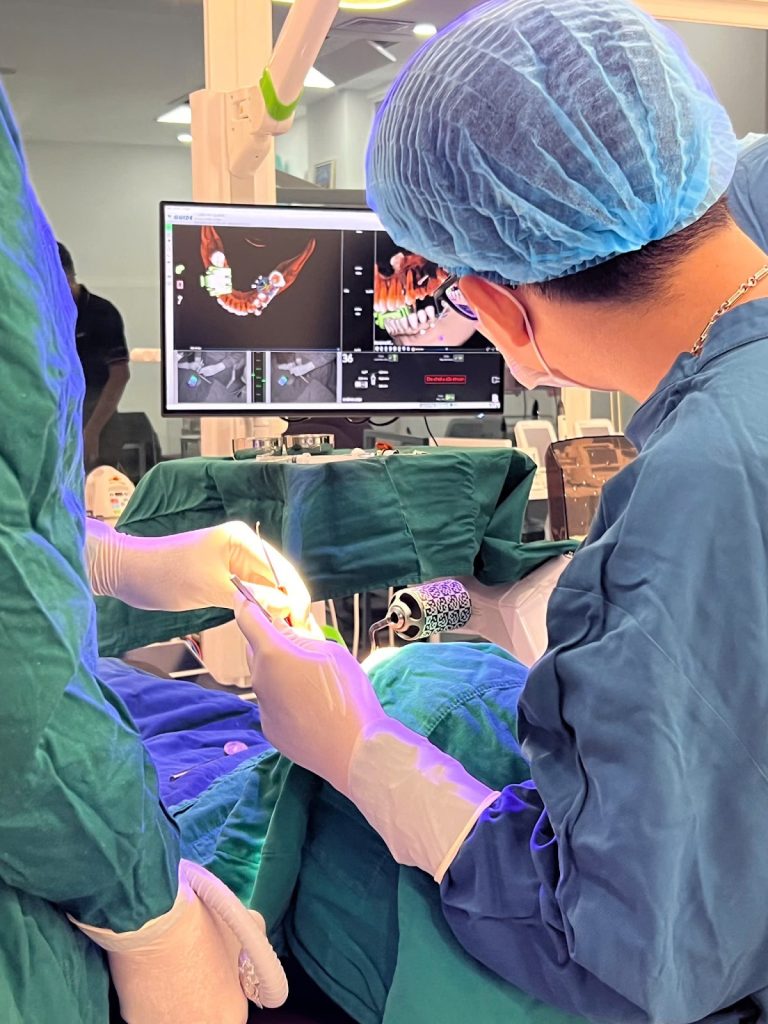
Implant placement performed with a Dynamic Navigation System, allowing the dentist to visually monitor and control all surgical parameters throughout the procedure.
Magnetic Mallet Technology
Magnetic mallet technology is used in ridge expansion and sinus lift procedures. The force applied is precisely controlled and produces less vibration compared with conventional manual techniques, reducing excessive trauma and improving patient comfort during treatment.
Platelet-Rich Fibrin (PRF)
PRF therapy promotes rapid hemostasis and enhances healing of both bone and soft tissues.
Comprehensive Surgical and Postoperative Care
Preoperative antibiotic protocols and postoperative care are carefully managed. Laser therapy is used to help minimize postoperative swelling. In addition to routine postoperative antibiotic prescriptions, HMU mouthwash containing 0.12% chlorhexidine, developed by Hanoi Medical University, may also be recommended. This mouthwash helps reduce the bacterial load within the oral cavity after surgery, thereby minimizing swelling and discomfort.
Digitalization extends beyond surgery and is comprehensively applied to impression taking and prosthetic fabrication. This reduces patient discomfort, shortens waiting times, and enables the delivery of highly accurate restorations with stable chewing function.

HMU 0.12% Chlorhexidine Mouthwash
According to Prof. Dr. Vo Truong Nhu Ngoc, the objective of implant dentistry is not simply to replace missing teeth but to restore chewing function, aesthetics, and long-term quality of life. Every patient receives a comprehensive treatment plan that may involve collaboration among multiple dental specialties.
The close combination of professional expertise, high-quality materials, continuous adoption of advanced technologies and techniques, and a commitment to innovation has helped Nhu Ngoc Dental Clinic establish and maintain its reputation as one of the leading dental centers in Hanoi and throughout Vietnam.
In addition to Pediatric Dentistry and Orthodontics, Implant Surgery and Aesthetic Dentistry remain key strengths of Nhu Ngoc Dental Clinic.
Afamily