

 11 June, 2026
6 Often-Overlooked Pediatric Dental Warning Signs Parents Should Never Ignore
Too many children are brought to the dentist only when their teeth already have massive cavities, severe swelling, or advanced infections—even though the first warning signs appear very early on and are simply overlooked.
Many parents still view oral health issues in young children as “minor details,” believing that “baby teeth will fall out anyway.” They assume that cavities do not require immediate treatment, thinking they can wait until the teeth shed naturally or until the child starts complaining of pain before scheduling a visit.
In reality, however, many pediatric dental conditions progress silently. They cause zero pain in the early stages but can leave long-term consequences if detected late, severely impacting the development of future permanent teeth as well as the child’s overall systemic health. Below are 6 crucial dental warning signs in children that parents frequently miss, despite being early indicators of serious issues.
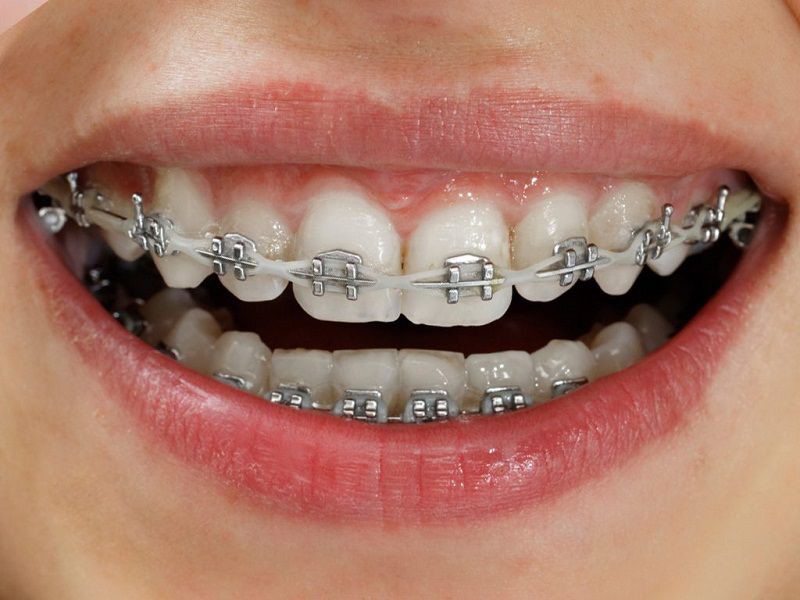
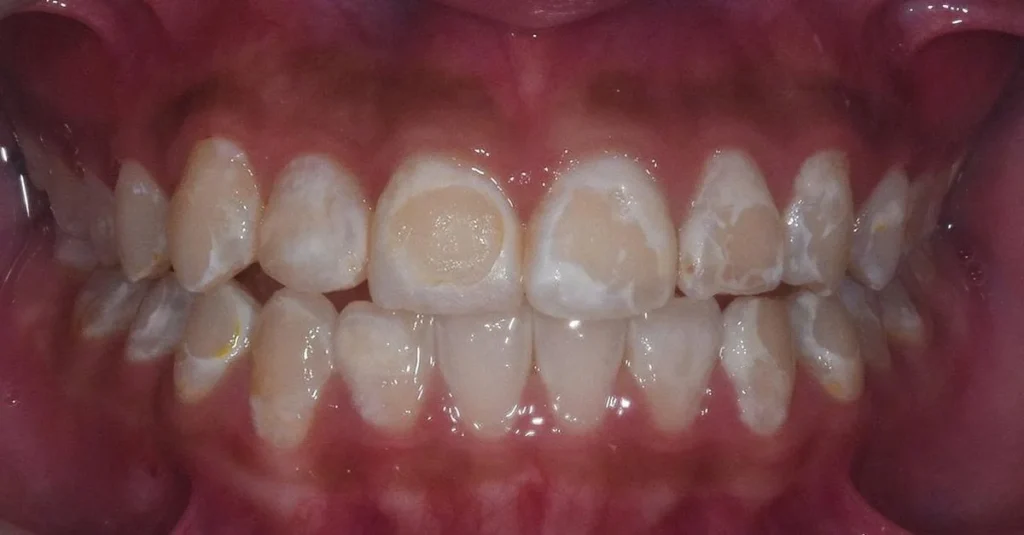 A patient presenting with multiple cavities due to poor oral hygiene control during orthodontic treatment.
1. White Spots on Teeth – The First Sign of Early-Stage Decay
Opaque, chalky white spots on the surface of the teeth are the earliest indicator of enamel demineralization (mineral loss).
At this stage:
-
The enamel matrix is damaged, but an actual cavity (hole) has not yet formed.
-
Children usually experience absolutely no pain or discomfort.
Because there are no obvious symptoms, this sign is easily mistaken for residual milk crust or a general calcium deficiency. If caught early, these lesions can be completely remineralized and reversed using targeted fluorides, calcium-phosphate therapies, and proper home care. However, if ignored, the damage will inevitably progress into a true cavity that requires invasive procedures like fillings or root canal therapy.
2. Frequent Snoring During Sleep
Chronic snoring is not merely an ear, nose, and throat (ENT) issue. This condition can be closely linked to jaw structure and airway dynamics, such as:
-
A narrow upper jaw (maxillary constriction)
-
Malocclusion (a misaligned bite)
-
Chronic mouth breathing
Over time, prolonged snoring can compromise a child’s quality of sleep, physical development, and overall facial aesthetics (adenoid facies). Children exhibiting this symptom require a comprehensive evaluation by both an ENT specialist and a pediatric dentist.
3. Persistent Bad Breath (Halitosis)
Chronic bad breath that persists despite regular, disciplined brushing is often a sign of an underlying pathology. In the vast majority of cases, the root cause originates right inside the oral cavity, including:
-
Active dental caries (decay)
-
Gingivitis (gum inflammation)
-
Pulpitis (infected tooth nerve)
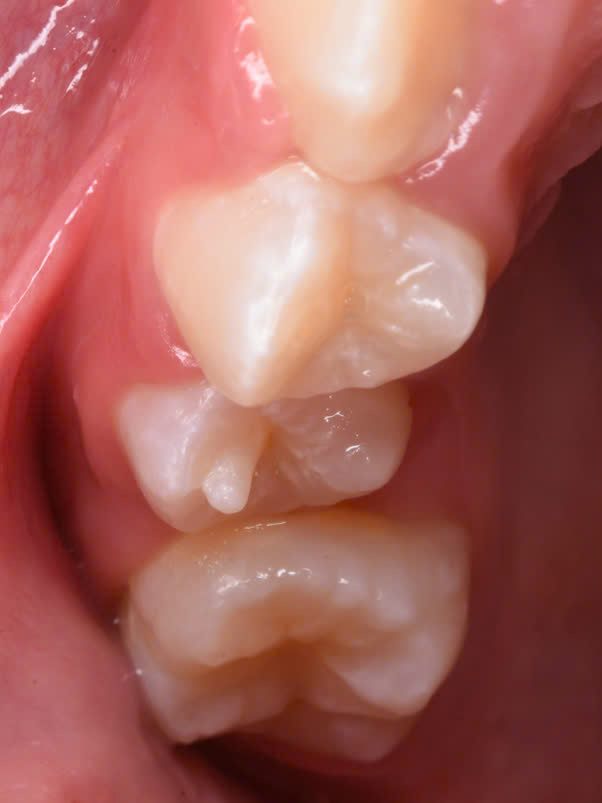
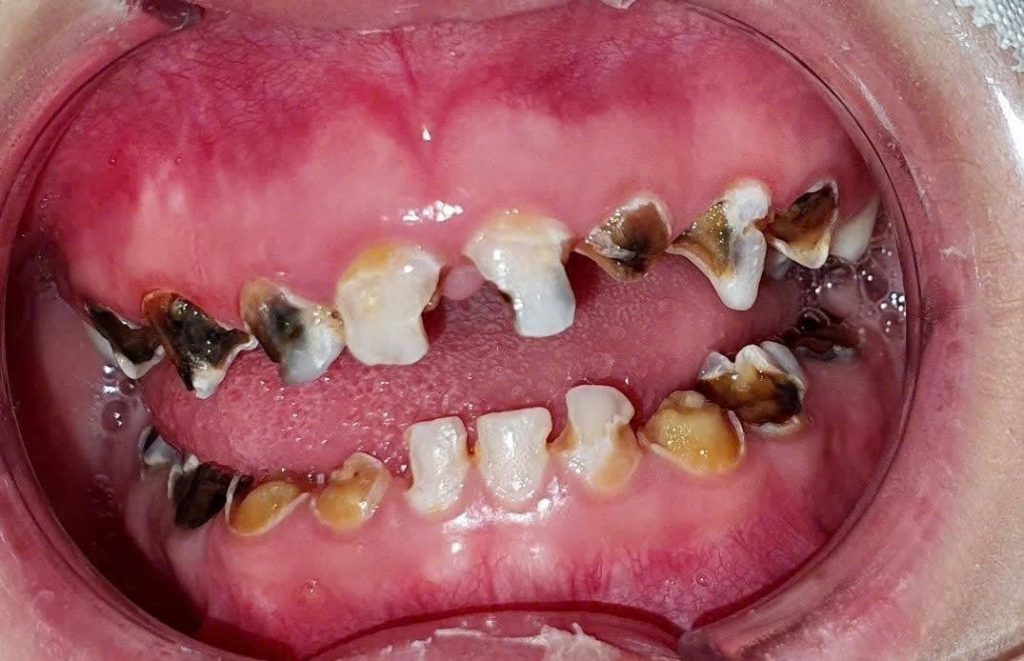 A young patient with widespread cavities across both arches resulting from poor oral hygiene and a lack of timely, early intervention.
In young children, decay can destroy tooth structure rapidly and trigger infections without causing any obvious pain, yet it will release a distinct, unpleasant odor. Additionally, a habit of mouth breathing dries out the oral cavity, creating the perfect low-saliva environment for odor-causing bacteria to thrive.
4. Chewing Exclusively on One Side
If a child consistently chews on only one side of their mouth, it is usually an unconscious avoidance reflex triggered by localized discomfort or pain.
Common culprits include:
-
Deep decay on the opposite side
-
Localized gum inflammation
-
An unstable bite alignment
If this habit becomes long-term, the child faces a high risk of developing a jaw deviation, facial asymmetry, and abnormal jawbone development. Detecting this early allows for timely interceptive care, sparing the child from complex skeletal complications down the road.
5. Food Constantly Getting Trapped Between Teeth
Frequent food impaction between teeth is rarely just a byproduct of careless eating habits. Instead, it is a classic indicator of:
-
Interproximal caries (hidden cavities forming between adjacent teeth)
-
Crooked or crowded teeth
-
Abnormal spacing or structural gaps
Stagnant food debris creates an ideal breeding ground for bacteria, exponentially accelerating the risk of rapid tooth decay and severe localized gingivitis. If this occurs on a regular basis, the child’s dentition needs to be clinically evaluated.
6. Teeth Grinding (Bruxism) While Sleeping
Teeth grinding in children is far more than just a passing phase or an annoying habit. This nocturnal behavior is frequently tied to underlying anatomical or airway issues, such as:
-
Malocclusion
-
A narrow jaw arch
-
Chronic mouth breathing
If left unmanaged over a prolonged period, it can cause severe enamel attrition (worn-down teeth), jaw joint and muscle pain, and disrupted sleep cycles. Parents should seek a professional consultation if grinding happens regularly, or if it is accompanied by restless sleep and daytime fatigue.
A Note to Parents
The keys to a lifetime of healthy smiles are early screening, timely intervention, and a scientifically backed home care routine. If you notice any of these subtle warning signs in your child, do not wait for pain to develop before taking action.
Nhu Ngoc Dental Clinic